BLS Certification Vs Recertification – Which One Do You Need Right Now?
Updated on: April 13, 2026
Cardiovascular diseases claim more lives in the US than cancer and accidents. Yet, according to the 2024 CARES report, only 41.7% of out-of-hospital cardiac arrest victims received bystander CPR. That means nearly 60 percent of people who could have been saved did not get immediate help. Your certification status matters more than you think. Whether you are getting certified for the first time or renewing your credentials, you need to understand the difference between BLS certification USA and recertification.
You must know which course applies to your situation right now. Are you starting fresh, or do you already have a card that is about to expire? Keep on reading to find out!
What Is BLS Certification?
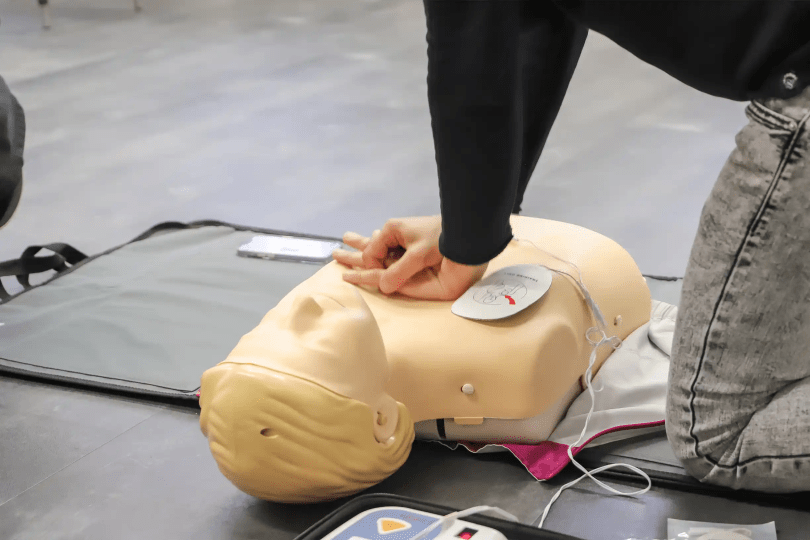
BLS (Basic Life Support) certification in the United States is your official credential that proves you can perform life-saving techniques. The training equips you with critical emergency response skills. You learn how to recognize cardiac arrest, deliver high-quality CPR (Cardiopulmonary Resuscitation), and use an AED (Automated External Defibrillator) effectively.
The BLS certification USA is needed for employment in various healthcare facilities across the country. Your certification card serves as proof that you have met national standards and demonstrates to employers that you can handle medical emergencies competently.
What Is BLS Recertification?
BLS recertification USA refers to the process of renewal for healthcare providers already holding a valid Certification. It is not a completely new course but a focused review and skills update.
You must renew every two years to maintain compliance. Your certification card lists the exact expiration date. Most healthcare employers will not allow you to work once your card expires. Some facilities even require renewal before the expiration date to avoid staffing or coverage gaps.
Read More: Your ACLS or BLS is Expiring Soon. Here’s How To Renew Quickly & Hassle-Free
How Does BLS Recertification Differ from BLS Certification?
The main difference is the teaching approach. Initial BLS certification USA assumes no prior knowledge, while recertification builds on what you already know. Both courses result in the same valid credential.
| Parameter |
BLS Certification |
BLS Recertification |
| Who It’s For |
First-time learners, expired cards (30+ days) |
Currently certified providers |
| Duration |
4-5 hours |
2-3 hours |
| Prerequisites |
None required |
Valid or recently expired BLS card |
| Content Depth |
Comprehensive introduction to all skills |
Focused review with updates |
| Certificate Validity |
2 years from the completion date |
2 years from the completion date |
Read More: Chest compressions – the first-line response
How to Determine Which Course You Need
Your situation will determine whether to apply for certification or recertification. Below are the factors to consider.
Check Your Current Certification Status
Take out your BLS card and check the expiration date. If your card expires within 60 days, take BLS recertification. If it expired more than 30 days ago, most providers will require you to complete the full BLS certification course again.
Consider Your Previous Training
Think about the last time you practiced BLS skills. If you have been using these skills regularly at work, recertification is appropriate. If you have not practiced in months or years, the full BLS certification USA may be better for a complete review.
Verify Employer Requirements
Your employer’s policy is the most important factor. Contact your HR department before enrolling to confirm their needs for BLS certification or recertification. Check with which providers they accept, as not all online courses meet the standard of every facility.
Check Your Skill Confidence Level
Assess your current abilities honestly, even if your card is still valid. If you cannot remember proper compression technique or AED pad placement, consider taking the full course. Choosing recertification when you need a deeper review can put patients at risk.
What Happens If Your Certification Expires?
Letting your BLS certification lapse creates consequences that affect your time, money, and professional standing. Here is what happens when your card expires:
- You cannot take the shorter recertification course and must repeat the full BLS certification USA program.
- Your card expires and is no longer valid, and employers cannot use it for compliance verification.
- You will pay more since full certification is more expensive than timely recertification.
- You’ll spend more time, typically an additional two hours in class, compared to recertification
How to Get BLS Certification or Recertification?
Renewing your BLS recertification USA keeps you compliant and confident. The whole process can be done online from home. Certification and recertification generally follow the same process, but recertification is faster because the material is familiar. Follow the steps below.
Step 1: Check Your Expiration Date
Check your certification card now. The expiration date is in the format month–day–year. Fill in a date 60 days before it expires, which will allow plenty of time to renew without last-minute pressure.
Step 2: Choose an Online Renewal Provider
Opt for a reputable online BLS recertification USA provider. Seek those platforms that associate themselves with either the American Heart Association or the American Red Cross. First, ensure that your employer accepts online renewal before investing in buying the course.
Step 3: Create Your Account and Enroll
Register on the platform of your provider with basic information. Pay for the course and have immediate access to online learning modules.
Step 4: Access Your Online Course
Log in once registered. The full certification course generally requires 4 hours to complete, the renewal course about 2–3 hours. Work at your own pace through the modules.
Step 5: Review Updated Guidelines and Protocols
Watch video demonstrations of CPR techniques, AED use, and emergency procedures. If you are renewing, pay close attention to guideline changes since your last certification. The 2025 AHA Guidelines include new protocols for opioid-related emergencies.
Step 6: Complete the Online Assessment
Online exam: Complete this online with the required score. Most platforms allow multiple attempts if you fail the first time. The assessment ensures you maintain proficiency in key skills.
Step 7: Download Your New Certification Card
You will be emailed your updated eCard directly upon passing the exam. Your new two-year certification period starts on the completion date. Send the new certification to your employer’s HR department immediately.
Read More: AED Laws and AED Requirements by State
Common Mistakes to Avoid in BLS Certification and Recertification
Healthcare professionals frequently make unnecessary mistakes with their BLS credentials; here’s how to learn from those mistakes to save time and undue stress.
Waiting Until the Last Minute
Do not wait until your certification expires to start the renewal process. Most training centers fill up weeks in advance, and you may not find an available class before your expiration date. Schedule your BLS recertification USA at least 60 days early to avoid coverage gaps.
Assuming All Online Courses Are Accepted
BLS certification online USA options vary widely in quality and employer acceptance. Some employers accept only credentials issued by the American Heart Association or the American Red Cross. Always confirm acceptance with your HR department before paying for any online course.
Forgetting to Bring Required Documentation
You need your current (or recently expired) BLS card to enroll in recertification. Some providers also require a photo ID for verification. Gather all necessary materials before starting your online course to prevent delays.
Skipping Practice Between Certifications
Many healthcare workers do not practice BLS skills between renewal cycles. CPR proficiency can decline within three to six months. Review BLS techniques periodically through online videos or workplace drills. Consistent practice improves your real-life emergency performance.
Not Updating Your Employer Records
Getting recertified is only half the process. You must submit your new card to your employer’s HR department. Many facilities track expiration dates and will not allow you to work with an expired card on file. Upload your certification immediately after completion.
Ignoring State-Specific Requirements
All states have different requirements for BLS certification USA, and each profession may differ due to specific providers or training formats. Check your state licensing board requirements before enrolling to avoid repeating the course later.
BLS Certification USA: Stay certified and save lives confidently.
Whether it’s your first time seeking BLS certification USA or renewing your existing one through BLS recertification USA, take immediate action to avoid getting caught unprepared. Remember: your certification will expire exactly two years after completion, and not taking immediate action means you may end up taking the entire course again. So check your card today and press the option that best describes your current status.
Need renewal or certification? Browse our BLS certification online USA courses, which offer flexible scheduling and thorough skills training. Take care of your requirements at your own pace while covering all the standards the AHA has to offer.
FAQs
1. Can I take BLS recertification if my card expired last month?
Most training centers provide the option for recertification up to 30 days after expiration, but beyond that time, you need to start over with a complete BLS certification USA course. Call the desired provider for specific grace period policies prior to enrollment.
2. Is there some sort of difference between BLS and CPR certification?
Yes, BLS certification USA is more comprehensive than basic CPR. BLS covers CPR for all ages, the use of AED, team dynamics, airway management, and relief of choking. It is intended for healthcare professionals who respond to emergencies in both in-and out-of-hospital settings professionally. Basic CPR is focused on single rescuers and is usually targeted at laypeople.
3. Do I need different certifications for pediatric and adult emergencies?
No, BLS certification USA includes adult, child, and infant techniques all in one course. PALS, or Pediatric Advanced Life Support, is another advanced certification that targets healthcare professionals working specifically in pediatric settings.
PALS CERTIFICATION
Author
PALS Certification is a trusted provider of online life support training, offering PALS, BLS, and ACLS certification and renewal courses. Our flexible training programs follow industry guidelines, offer self-paced learning and instant certification, ensuring providers stay compliant, advance their credentials, and deliver high-quality patient care.